
Short answer: check the panels, tracks, and seals now, before the first big wind event
If a strong gust gets behind your garage door and the door fails, wind pressure can move through the whole house, lifting the roof or blowing out windows from the inside. That's why building codes treat garage doors as structural, not just decorative. A ten-minute inspection this month is worth more than any repair after a storm already found the weak spot.
Why the garage door is the weakest wall in the house
Every other wall in a home is continuous framing covered in sheathing, sheetrock, and siding. The garage door opening is a large gap filled with a panel assembly that only stays in place because of springs, tracks, rollers, and a handful of hinges. It's also usually the biggest single opening on the exterior. When wind pushes against that surface, the load has to travel through those mechanical parts instead of solid framing. If a track is bent, a roller is worn, or a panel is already cracked, that's exactly where the door gives way first.
This matters more in fall and winter here than people expect. Santa Ana wind events bring sudden, strong gusts out of the dry inland areas, often with little warning. Winter storms add sustained wind plus driving rain, and coastal properties deal with salt air that quietly corrodes hardware year-round. A door that's been fine all summer can have hidden wear that only shows up under real pressure.
What to inspect before the next windy night
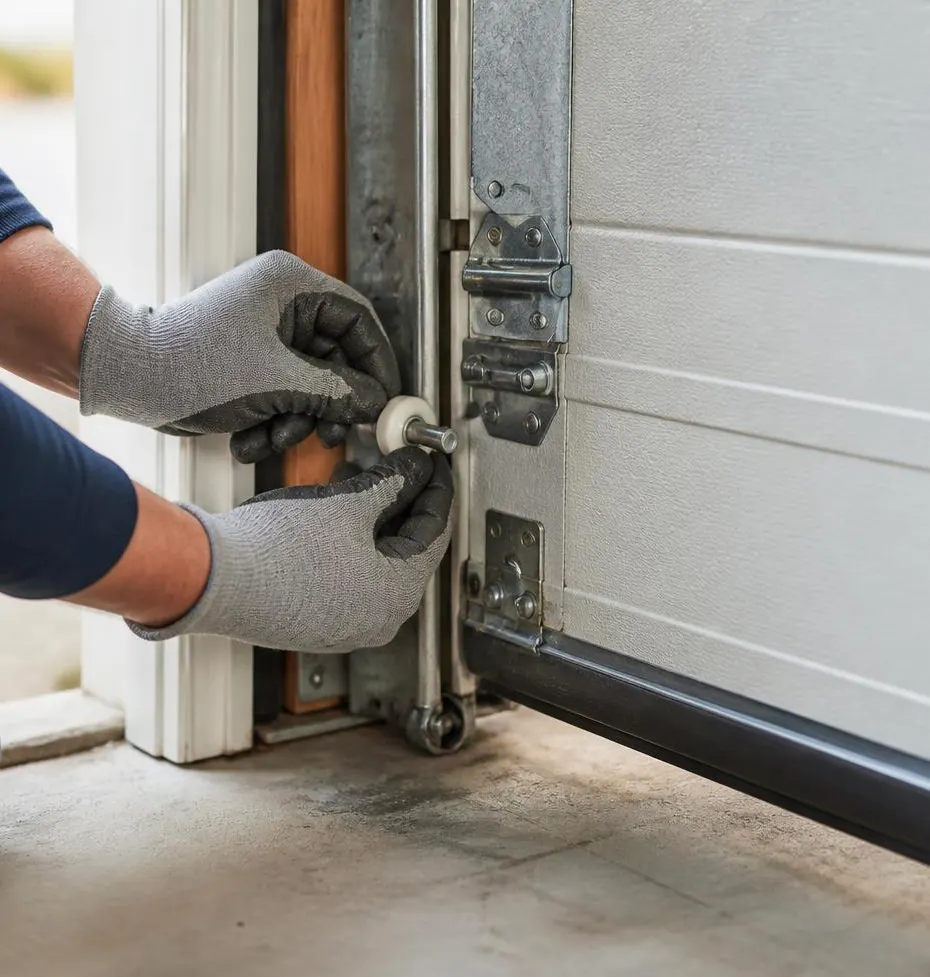
- Tracks: Look for bends, gaps where the rollers sit loosely, or spots where the track pulls away from the wall bracket. A warped track lets the door flex more than it should under wind load.
- Rollers and hinges: Cracked or worn rollers, especially nylon ones, can jump the track under stress. Hinges with elongated screw holes mean the panel has already been working loose.
- Panels: Dents are cosmetic, but cracks or delamination (common on older steel or wood doors after years of sun and dry heat) weaken the panel's ability to resist wind pressure.
- Weatherstripping and bottom seal: Dry, cracked, or missing seals let wind-driven rain in around the edges and reduce how well the door holds its shape under pressure. Dust and wildfire smoke from the dry season also work their way in through gaps like these.
- Springs: A door with a weak or unbalanced spring works harder every time it opens, and that extra strain shows up fastest during a wind event when the door is already under load. Rust from coastal humidity speeds this up.
- Opener and backup power: If winter storms knock out power, a battery backup on the opener (or a working manual release) keeps the door usable instead of stuck open or shut.
Reinforcing the door for wind
Older doors, particularly on homes that predate stricter wind-load requirements, often lack horizontal bracing. Retrofit kits that add bracing across the back of the panels are a reasonable middle step if full replacement isn't in the budget this year — they won't match a wind-rated door built to current standards, but they measurably stiffen a panel that's currently flexing under gusts. For homes doing broader earthquake retrofit work, it's worth asking the contractor to look at the garage door opening at the same time, since both jobs deal with how the structure handles sudden lateral force.
Where panels are already compromised — visible warping, rust-through, or a door that shudders noticeably in moderate wind — bracing is a patch, not a fix. Full replacement with a door rated for higher wind loads is the more durable answer, and it's a reasonable project to plan for before storm season peaks rather than after a door fails.
When to call Los Angeles Garage Door Pro
If your inspection turns up a bent track, a spring that looks stretched or rusted, or a door that feels unusually heavy or uneven when it opens, don't wait for a wind event to test it. We handle Garage Door Maintenance visits that cover exactly these wear points — tracks, rollers, springs, and seals — and catch problems while they're still cheap fixes. If a spring has already failed or a panel is cracked badly enough to compromise the door's structure, our Spring Replacement and repair technicians can get it back to full strength, and if something goes wrong in the middle of a storm, our emergency service means you're not stuck with an open or jammed door overnight.
Call Los Angeles Garage Door Pro before the next storm rolls through Los Angeles, Santa Monica, Beverly Hills, Culver City, Brentwood, West Hollywood, Inglewood, or Burbank — a quick inspection now beats an emergency call later.