
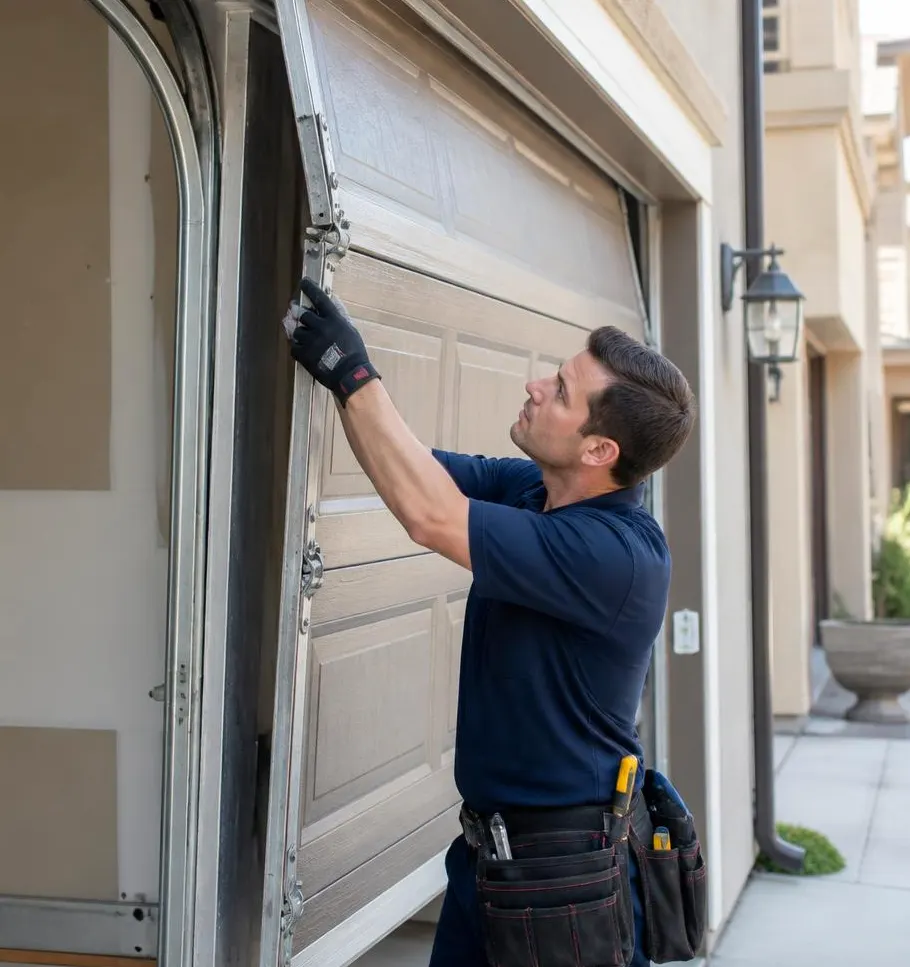
What a Tech Sees on the First Rainy-Season Call
Every year it's the same pattern: the first real rain hits after months of dry weather, and the service calls start rolling in. A homeowner hits the opener button and the door groans, jerks, or stops halfway. Nine times out of ten, it's not a new problem — it's a problem that built up quietly over the dry season and finally showed itself the moment moisture and cooler temperatures hit the hardware. Dust-caked tracks, dried-out lubricant, and sun-brittled weatherstripping all pick this exact time of year to fail.
Why Fall Is the Turning Point
Garage doors in this area spend most of the year dealing with heat, dry air, and dust — sometimes wildfire smoke drifting in and settling on every moving part. Then, almost overnight, the season flips: rain starts, nights get cooler, and coastal homes pick up salt-laden air. That shift stresses metal, rubber, and electronics that have been baking and drying out for months. A door that worked fine in August can start misbehaving in November simply because conditions changed, not because anything broke outright.
1. Clear Out Summer Dust and Debris
Before you do anything else, wipe down the tracks, rollers, and springs. Dust and fine grit from a dry summer act like sandpaper once they mix with moisture, accelerating wear on rollers and hinges. A dry microfiber cloth followed by a vacuum on the tracks gets rid of most of it. Avoid hosing anything down directly — you want the parts clean and dry, not clean and wet.
2. Re-Lubricate Moving Parts
Heat and dry air break down lubricant on rollers, hinges, and springs faster than most people expect. If you haven't lubricated since spring, do it now, before the rain starts. Use a silicone-based garage door lubricant rather than household oil, which attracts dust and gums up. Focus on:
- Roller bearings (not the track itself)
- Hinges between panels
- The torsion spring, with a light coat
- The opener's chain or screw drive, per the manufacturer's instructions
3. Check Weatherstripping and Seals
Rubber seals along the bottom and sides of the door take a beating from UV exposure during the dry months. By fall, they're often cracked, flattened, or pulling away from the frame. This is the piece doing the most work to keep wind-driven rain and runoff out of the garage once storms arrive. If it's stiff, cracked, or no longer makes full contact with the floor when the door is closed, replace it before the first heavy rain rather than after.
4. Test the Auto-Reverse Safety Sensors
Sensors mounted near the floor on each side of the door get knocked out of alignment more often than people realize — a stray broom, a parked bike, a bump from unloading groceries. A door that reverses unexpectedly, or refuses to close at all, often traces back to sensors that are slightly misaligned or have a dusty lens. Wipe the sensor eyes clean and check that both indicator lights are solid, not blinking.
5. Inspect Springs and Hardware for Wear
Dry heat causes metal to expand and contract repeatedly, which over time fatigues torsion and extension springs. Fall is a good time to look for visible gaps in the coils, rust spots, or a door that feels unusually heavy when lifted manually. Springs are under serious tension and are not a DIY repair — if something looks off, that's a job for a technician, not a weekend project.
6. Give Fasteners and Retrofit Hardware a Look
If the garage has had any seismic retrofit bracing or reinforced hardware installed, run a quick visual check that brackets and bolts are still snug. Temperature swings and routine door operation can gradually loosen fasteners, and it's easier to catch a loose bracket in October than to deal with a rattling, misaligned door mid-winter.
7. Coastal Homes: Watch for Corrosion
If the property is near the coast, salt air accelerates rust on springs, hinges, and the opener's metal components. A quick wipe-down with a dry cloth after visible salt haze, plus the lubrication steps above, goes a long way toward preventing corrosion before it starts eating into hardware.
When to Call Los Angeles Garage Door Pro
If the door is sticking, reversing on its own, making new noises, or just feels heavier than it used to, that's the point to call in a technician rather than keep testing it yourself. We handle Garage Door Maintenance visits that cover lubrication, track alignment, and hardware inspection in one trip, and we handle Spring Replacement when wear has gone past the point of a simple fix. Catching these issues in the fall means fewer surprise breakdowns once winter rain and cooler nights settle in.
Ready for a pre-winter check? Los Angeles Garage Door Pro serves Los Angeles, Santa Monica, Beverly Hills, Culver City, Brentwood, West Hollywood, Inglewood, and Burbank. Call us today to get your garage door ready for the season ahead.